
Aviator Session Length and Breaks
Aviator by Spribe is a crash game built around an increasing curve that can crash at any time. Each round lasts about 8 to 30 seconds, and players choose when to cash out before the crash.
This guide explains how round speed affects a session, why 60 to 90 rounds can fit into an hour, and how a fixed budget and planned breaks can limit exposure. It also covers the game’s two bet panels, auto-play controls, and the timing of cash-out requests.
Round Pace and Mechanism
Aviator rounds last about 8 to 30 seconds, with a few seconds between rounds. The game therefore allows about 60 to 90 rounds in one hour.
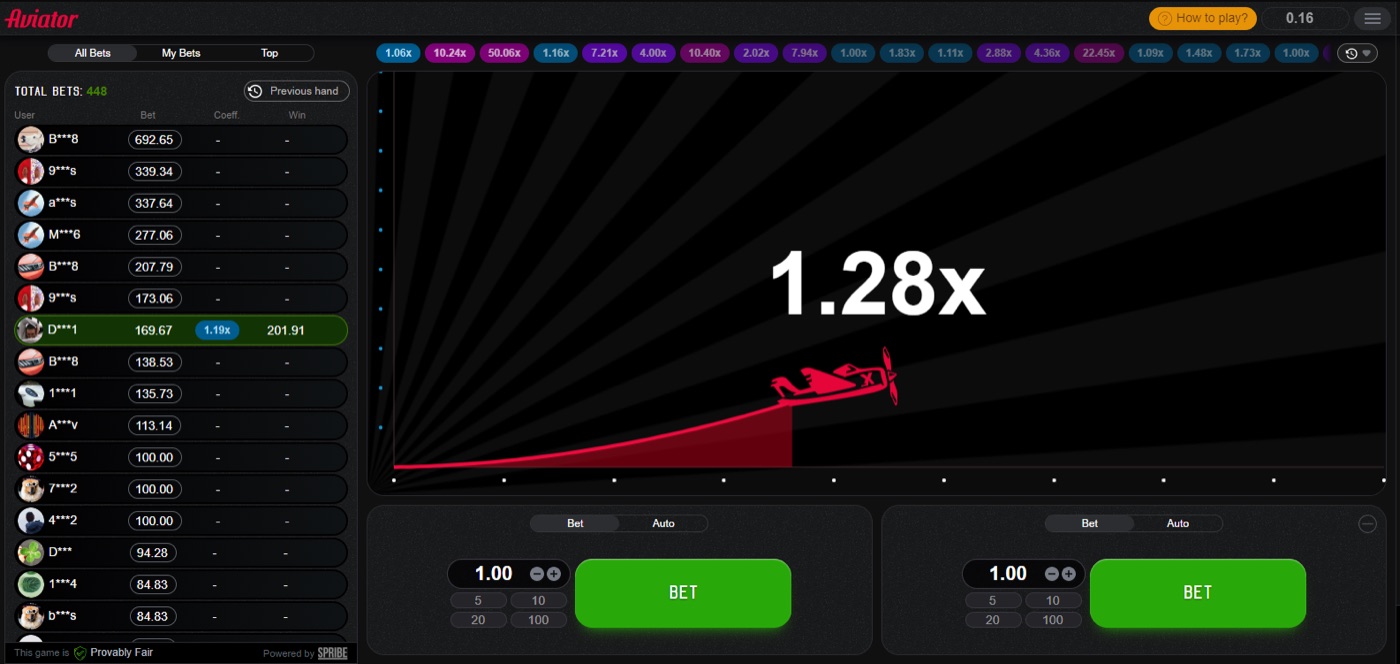
The plane rises while the round multiplier increases before a possible crash.
Before each round, the server publishes a SHA-256 hash of its server seed. Client seeds from players are combined with that seed, and the crash point is fixed before take-off. After the round, the inputs can be revealed and checked with the verification tool inside the game.
The multiplier starts at the beginning of the round and increases while the plane remains in flight. A player must cash out before the crash to receive the current multiplier. If the crash happens first, the relevant bet loses.
The game is not a slot and has no bonus round. Its structure is an instant game in which the main decision is the cash-out point for each bet.
- A new round begins after a short gap.
- The multiplier rises during the flight.
- The crash point is fixed before take-off.
- A cash-out request must reach the server before the crash.
The pace can make a short session feel longer than it is. At 60 rounds per hour, 15 minutes contains about 15 rounds; at 90 rounds per hour, the same period contains about 22.5 rounds. Actual round counts vary because round lengths and gaps vary.
Rounds Per Hour
Aviator provides about 60 to 90 rounds per hour, while individual rounds last about 8 to 30 seconds. A 30-minute session can therefore contain about 30 to 45 rounds.
This range matters when setting a session budget. A player who plans to risk a fixed amount on every round needs to multiply the intended stake by the expected number of rounds, not just by the minutes spent at the screen.
| Session time | At 60 rounds/hour | At 90 rounds/hour | Exposure at one $1 bet |
|---|---|---|---|
| 15 minutes | About 15 rounds | About 22.5 rounds | About $15-$22.50 |
| 30 minutes | About 30 rounds | About 45 rounds | About $30-$45 |
| 60 minutes | About 60 rounds | About 90 rounds | About $60-$90 |
The table shows stake turnover, not a guaranteed loss. Results depend on cash-out choices and round outcomes, while the expected value is negative 3% of the stake at every cash-out target. The 3% figure is the house edge associated with the stated 97% RTP.
Players can use the following simple calculation before starting:
- Choose the session length in minutes.
- Multiply minutes by 60 and divide by 60 or 90 to estimate the round range.
- Multiply the estimated rounds by the planned stake per bet.
- Use the higher estimate if the aim is to set a more cautious spending ceiling.
For example, a 30-minute session at one $1 bet per round gives an estimated 30 to 45 bets. A player who wants a lower exposure can reduce the stake, shorten the session, or stop before the estimate is reached.
Typical stakes range from about $0.10 to $100 per bet, but the available range depends on the operator. That makes the same 30-minute playing period very different for two players using different stake levels.
Session Budget Planning
Aviator has a 97% RTP and a 3% house edge, so a session budget should be set before the first round. The game’s expected value is minus 3% of the stake at every cash-out target.
A session budget is the amount a player is prepared to lose during one planned period. It is not a prediction of the result, and it should not be increased after losses. A budget can also include a win limit, so a player does not continue simply because the balance has increased.
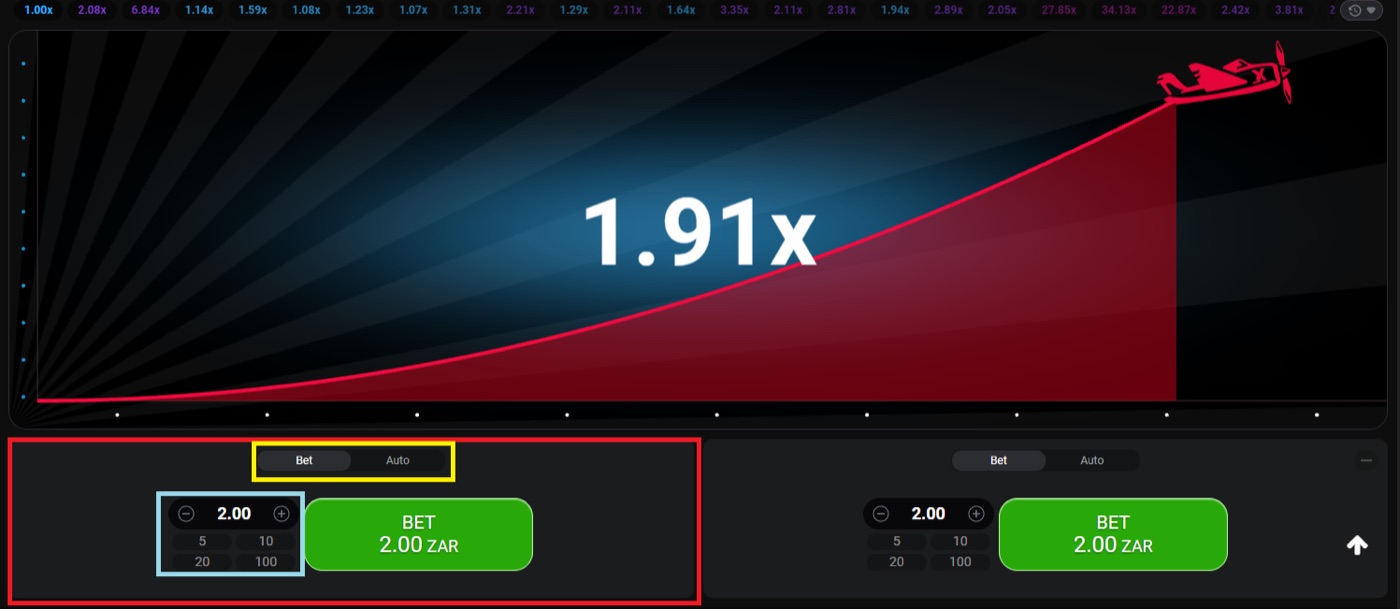
The desktop interface shows a round at 1.91x with two separate bet panels.
The game has two bet panels per round, and each panel can use a separate cash-out. This can divide a planned stake between two decisions, but it does not remove the 3% house edge or turn a losing session into a winning one.
Guides commonly suggest staking no more than 2% of a bankroll per round. That percentage is a risk-control guideline, not a guarantee that a session will stay within a chosen loss amount. A player using two bet panels should consider the combined amount at risk in the round.
- Set the total session budget before opening the game.
- Choose a maximum number of rounds or minutes.
- Set a loss limit that ends the session.
- Set a win limit if continuing after a positive result would create extra risk.
- Do not add funds or raise the stake to recover a loss.
Consider a player with a $50 session budget who expects 30 rounds. A planned total of $1 per round would put about $30 of stake turnover through the session, before any second bet, while $2 per round would put about $60 through it. The second plan exceeds the chosen budget if every round is played, so the stake, round count, or both would need to change.
The calculation becomes more important when using two bets. A $1 stake on each panel means $2 is exposed in one round. Over 30 rounds, that represents about $60 in total stakes before any cash-outs are considered.
A player may encounter free bets, Rain Promo offers, or operator promotions in the game chat. These features do not change the need for a personal session budget, and any conditions depend on the operator.
For context, a player researching an Aviator crash game may read about the multiplier, cash-out, stake, RTP, or deposit before deciding on a session, including aviator estrela bet. The linked information should not replace the player’s own budget or break plan.
Breaks and Auto Controls
Aviator supports Auto Bet and Auto Play for 10 to 100 rounds, with stop-on-win and stop-on-loss options. The game also provides an Auto Cash-Out setting that uses a preset multiplier.
These controls can help define the end of a block of play, but they do not change the odds. Rounds remain independent, and no setting can predict the next crash point.
A useful break plan divides a session into short blocks rather than treating 60 or 90 rounds as one uninterrupted period. For example, a player can set a 10-round or 20-round block, then leave the game before deciding whether to continue.
- Choose the maximum number of rounds for the first block.
- Set Auto Cash-Out only if its preset multiplier fits the budget.
- Use stop-on-loss to end the block at the chosen loss point.
- Take a break after the block, whether the result is positive or negative.
- Review the remaining budget before starting another block.
Auto Play can continue for 10 to 100 rounds, so it should be treated as a time and exposure control rather than a way to improve results. A 100-round setting may represent more than one hour at some round rates, while 10 rounds may take only a few minutes.
A break should last long enough to interrupt the rapid sequence of decisions. During the break, the player can check the original budget, the number of rounds already played, and whether the planned session time has ended.
- Take a break when the planned time ends.
- Pause after reaching the loss limit.
- Pause after reaching the win limit.
- Stop if the next stake would be higher than planned.
- Do not restart immediately to chase a previous result.
Responsible gambling means using money set aside for entertainment and stopping when the personal limit is reached. A break is a control point, not a method for changing the game’s probabilities.
Cash-Out Timing
Aviator’s multiplier can reach 1.5x in about 64.7% of rounds and 2x in about 48.5% of rounds. The probability that a round reaches multiplier m is given as 0.97 divided by m.
The same figures show why a target affects frequency and variance but not the house edge. A 1.5x cash-out target may be reached more often than a 5x target, but the expected value remains minus 3% of the stake at either target.
| Target multiplier | Probability the round reaches it |
|---|---|
| 1.2x | 80.8% |
| 1.5x | 64.7% |
| 2x | 48.5% |
| 3x | 32.3% |
| 5x | 19.4% |
| 10x | 9.7% |
About 3% of rounds, or roughly 1 in 33, crash instantly at 1.00x. This result can occur before a low cash-out target is reached, so a low target is not a guarantee of a winning bet.
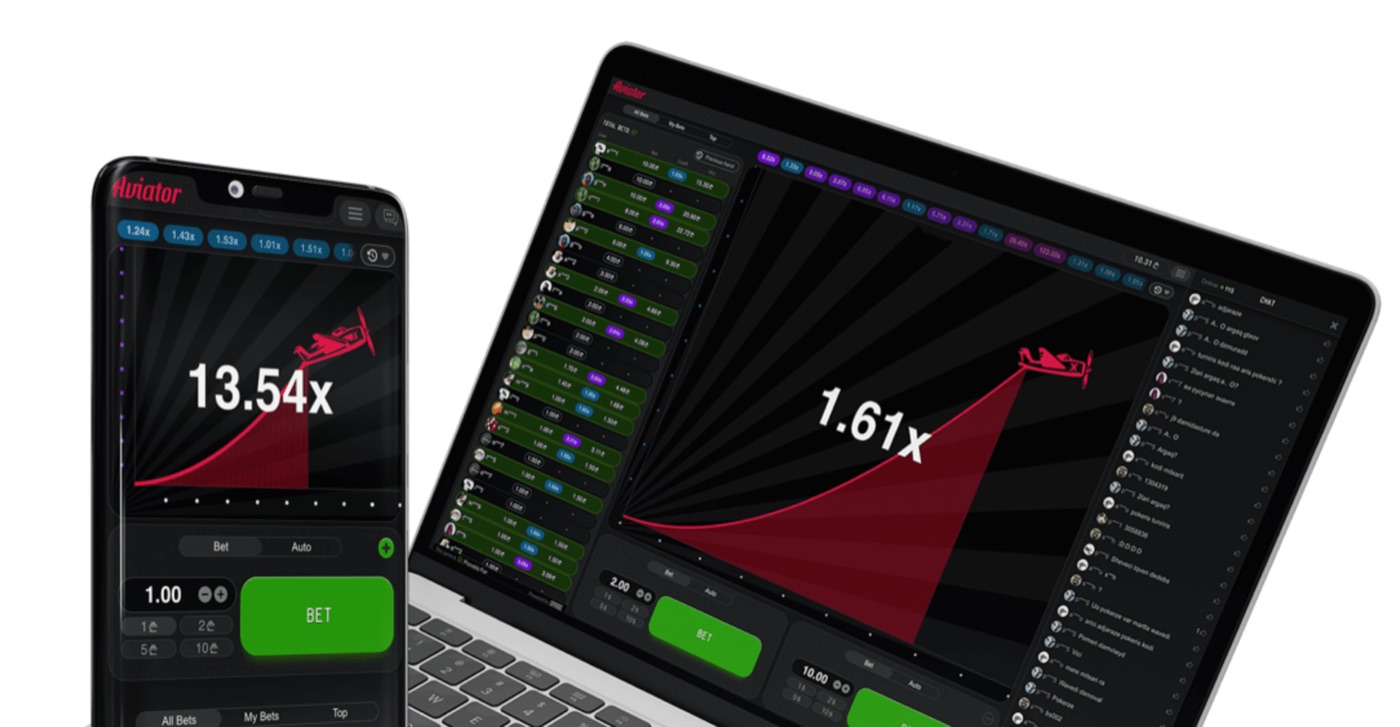
The game can be viewed on a phone and laptop with different multipliers shown.
Cash-out timing also depends on connection and device performance. A cash-out request must reach the server before the crash, so a timeout can result from latency or a slow device. Neither the operator nor Spribe can change a result after the round starts.
The two-bet layout can separate decisions, such as one preset cash-out and one manual cash-out. It does not make the second bet independent from the player’s overall session budget, and it does not remove the edge.
Patterns and Session Decisions
Aviator rounds are independent, and the crash point is committed by hash before the round begins. About 3% of rounds crash instantly at 1.00x, but one result does not make another result more or less likely.
Round history shows previous multipliers at the top of the interface. That display records earlier outcomes, but it cannot establish a reliable pattern for the next round.
- A run of low multipliers does not require a high multiplier next.
- A high multiplier does not make another high multiplier due.
- Graph analysis does not change the stated probabilities.
- The best time to play does not change the odds.
- A strategy chart or PDF does not change the 3% house edge.
Martingale raises the stake after a loss and reaches 1,024 times the base stake after 10 losses. Guides warn against this approach because the required stake can grow quickly during a losing sequence.
Fibonacci and D’Alembert systems are also named in guides, but they do not beat the 3% edge. Changing stake size can change variance and the speed of wins or losses, but it cannot create a positive expected value.
A calmer session plan uses the same stake rules after both wins and losses. It also treats a break as part of the plan, rather than waiting for a particular multiplier or a perceived pattern.
Practical Session Setup
Aviator works on desktop, tablet, and mobile browsers, and the game was built for low bandwidth and budget devices. Demo mode is available through an operator demo or demo.spribe.io and needs no registration.
The game interface includes Bet and Auto tabs, two bet panels, a live bets panel, round history, chat, and a Provably Fair badge. These features can support a planned routine, but they do not alter the round probabilities.
A player can begin with demo mode to learn the timing of the curve, the cash-out control, and the pause point between rounds. The practice result has no real-money effect, so it does not demonstrate a guaranteed outcome for later play.
- Check the planned session time and budget.
- Choose one or two bet panels without exceeding the combined stake plan.
- Select a round block, such as 10 or 20 rounds.
- Set an Auto Cash-Out only when it matches the intended target.
- Keep the loss and win limits visible or written down.
- Stop for the planned break when the block ends.
Operators set their own win caps and available stake ranges. The game itself does not publish a maximum multiplier, and guides quote different figures, so a player should not use an assumed maximum when planning a session.
There is no standalone official Aviator app from Spribe. The game runs inside an operator website or app, while apps using names such as “Aviator Predictor” are third-party products and cannot predict the crash point.
Aviator FAQ
Aviator rounds last about 8 to 30 seconds, and the game provides about 60 to 90 rounds per hour. Auto Play can be set for 10 to 100 rounds.
The game’s RTP is 97%, and its house edge is 3%. These figures apply to the game’s expected value, not to a promise about a particular session.
How long should an Aviator session last?
The facts do not set one required session length. A player can choose a time limit by using the 60 to 90 rounds per hour pace, then stop when the planned time or budget is reached.
How many rounds are in 30 minutes?
At 60 to 90 rounds per hour, 30 minutes contains about 30 to 45 rounds. The actual count can vary because rounds last about 8 to 30 seconds and have a few seconds between them.
Do breaks change Aviator odds?
No. Breaks can limit uninterrupted play, but they do not change independent round probabilities, the 97% RTP, or the 3% house edge.
Can Auto Play improve results?
No. Auto Play can run for 10 to 100 rounds and can use stop-on-win or stop-on-loss settings, but it cannot predict the crash point or remove the house edge.
Why can a cash-out time out?
The cash-out request must reach the server before the crash. Latency or a slow device can delay the request, so a timeout may occur even when the player selected cash-out before seeing the crash.
Can a predictor set the right break or cash-out?
No. The crash point is fixed before take-off through the provably fair process, and prediction is impossible from the published information. A break plan and a cash-out target can manage exposure, but neither predicts a result.